



Rapid Response
Our Rapid Response team works alongside NHS and Healthcare partners to provide compassionate, skilled support to people experiencing a mental health crisis when it is needed most. We offer immediate, short-term intervention that prioritises safety, dignity through a therapeutic approach, helping people feel understood and supported during difficult times.
Whether someone requires reassurance at home, supervision in a clinical setting, or safe transport to appropriate care, our team responds quickly and professionally to stabilise the situation and create a clear pathway forward.

What Our Rapid Response Team Provides
🟦 Reassurance, De-escalation & Emotional Support
Our staff are trained in trauma-informed approaches, active listening, and distraction techniques to help people manage intense emotions, anxiety, and distress. We focus on reducing risk while helping individuals regain a sense of control and safety.
🟦 Support During S136 Detentions
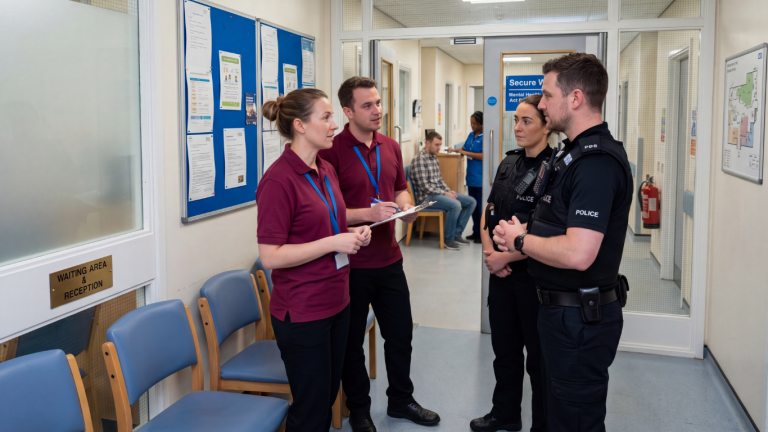
We provide one-to-one observation, supervision and reassurance to people detained under Section 136 of the Mental Health Act in assigned place of safety, helping maintain dignity and comfort during what can be a complex experience. Our team works closely with clinical and police partners to reduce stress and support smoother assessments.
🟦 Safe, Supportive Transport to Acute Mental Health Beds
When someone requires hospital admission, we offer safe, compassionate transport that ensures the person is supported throughout the journey. Our staff monitor wellbeing, offer conversation and grounding techniques, and help reduce fear or agitation.
🟦 Observations Around Self-Harm or Risk-Taking Behaviours
Our team provides constant or intermittent observations depending on clinical need. Staff are trained to recognise early warning signs, respond calmly, and use distraction and engagement strategies to reduce risk.
🟦 Handover Support to Acute Mental Health Services
We stay with the individual until they are safely handed over to the appropriate clinical team. Our staff share observations, concerns, and relevant updates to ensure continuity of care.
🟦 Transport Home After Discharge
For individuals who are ready to leave a clinical setting, we provide a safe and supportive journey home. Staff ensure people feel grounded, understand next steps, and are settled comfortably.
🟦 Community Access & Supervision in Public Spaces
Where appropriate, we support individuals to use public spaces and facilities safely, providing encouragement, reassurance and gentle supervision.
🟦 Engagement
We use a range of person-centred engagement tools including grounding techniques, sensory items, communication, and meaningful distraction to help reduce distress and create a positive, more stable environment.
🟦 Liaison with Family, Professionals and Other Agencies
We act as a bridge between clinical teams, family members, community services and social care. Our priority is ensuring that everyone involved understands the person’s needs and next steps.
🟦 Improving Access to Community Services
Our team helps individuals connect with ongoing support once the immediate crisis has passed — including outreach support, community mental health teams, wellbeing groups, and signposting to other helpful services.
Our Approach
✅ 24/7 responsiveness
✅ Trauma-informed, person-centred practice
✅ Experienced mental health support workers
✅ Strong partnership with NHS crisis teams
✅ Empathy, safety and dignity at every stage
✅ Focus on stabilisation and reducing hospital admissions where possible
Our goal is always to support the person in the least restrictive environment while keeping them, and the people around them safe.
Who We Support
We support adults experiencing:
- Acute mental health crisis
- Suicidal thoughts or self-harm behaviour
- Confusion or distress linked to mental health conditions
- Situations requiring urgent observation, supervision or monitoring
Working in Partnership
The Rapid Response team works closely with:
- NHS crisis services
- Police and S136 suites
- Acute mental health wards
- Community mental health teams
- Families, carers and advocates
- Social care and local authorities
This joined-up approach ensures that support is consistent, safe and responsive to individual needs.

Contact us
Get in touch
We are always happy to talk to you about what we do and how we may be able to help.
Connect with ISL
Follow us on social media.


